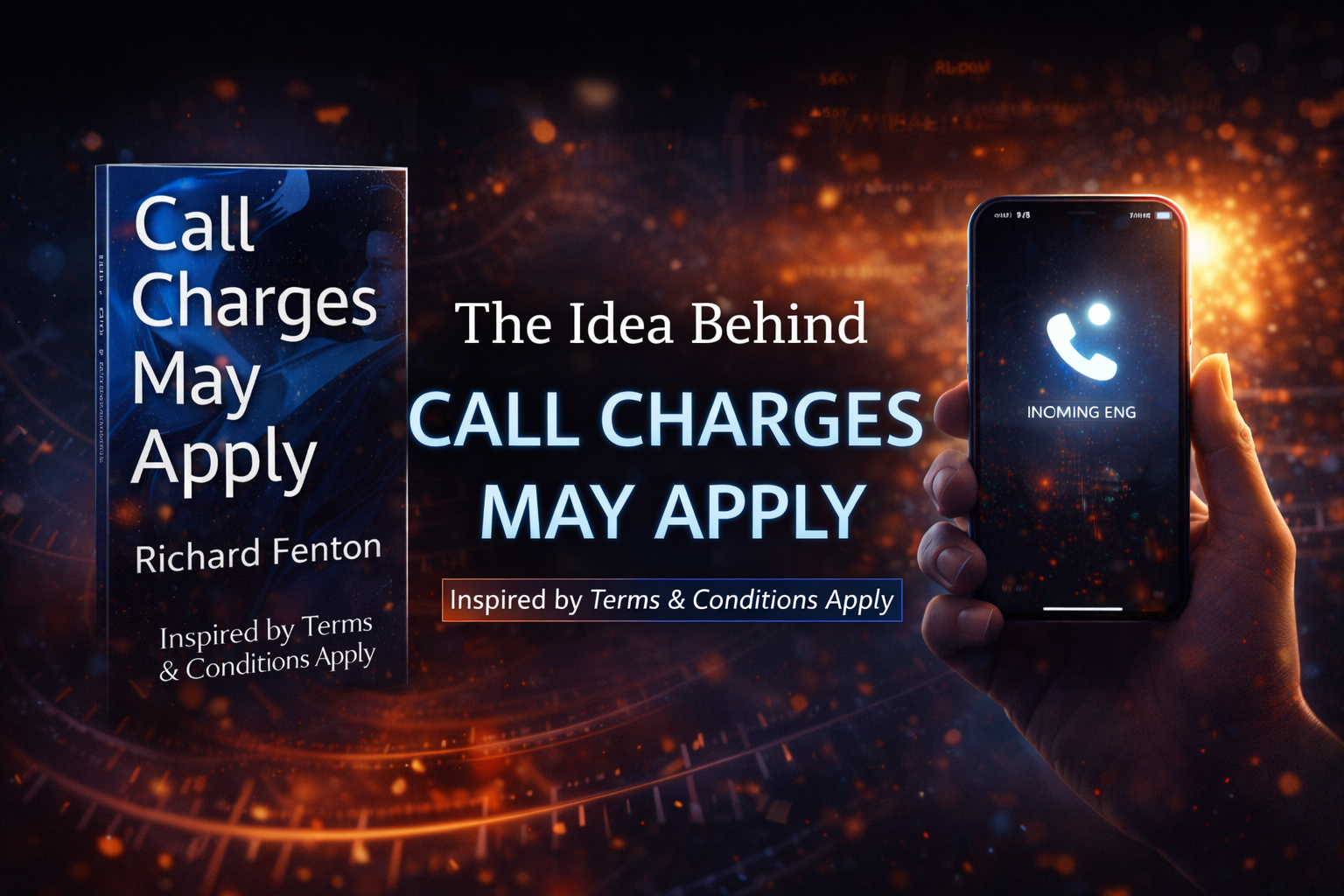
Sometimes a book begins with a single idea that refuses to let go.
For me, Call Charges May Apply didn’t appear out of nowhere. Its origins actually trace back to an earlier short story collection of mine, Terms & Conditions Apply. While writing that book, I found myself exploring the quiet but powerful idea that modern technology often asks us to accept things we barely understand.
We click “Agree” without reading.
We trust systems we don’t control.
And sometimes we discover the consequences only when it’s too late.
Those themes stayed with me long after the book was finished.
The Seed of an Idea
Terms & Conditions Apply explored a world where everyday digital agreements carried unexpected consequences. Each story looked at how technology shapes decisions, sometimes in subtle ways and sometimes with far darker implications.
But one question kept returning as I worked on those stories:
What if technology didn’t just influence the future — what if it could change the past?
That question eventually grew into the central concept behind Call Charges May Apply.
A Phone Call to the Past
The premise of Call Charges May Apply is deceptively simple.
A private tech company unveils a device that allows a phone call twenty years back in time.
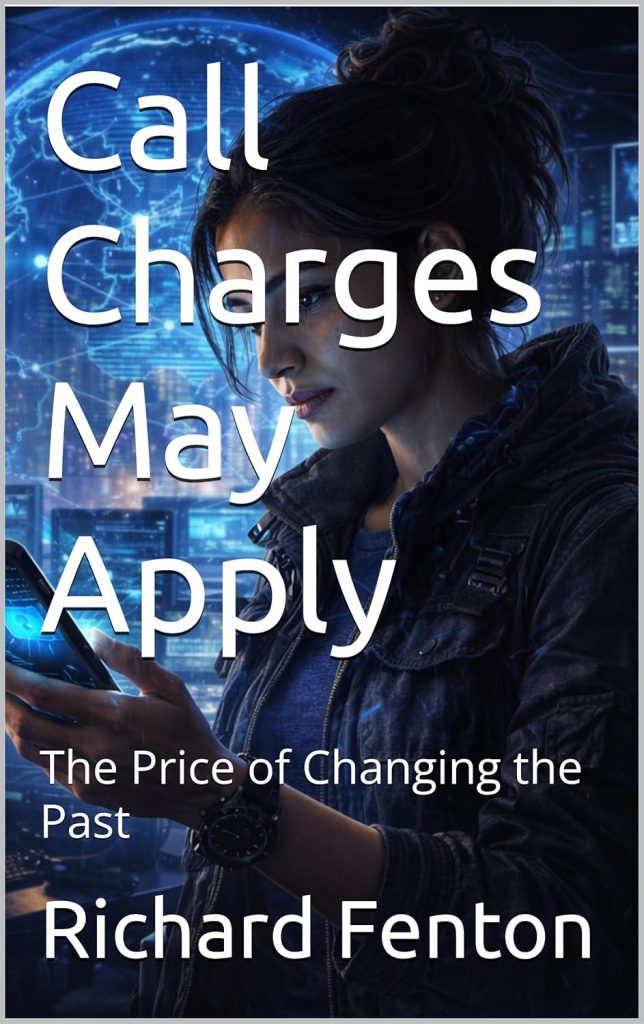
The rules are strict:
- Three minutes per call
- Three calls only
- No second chances
Across New York and London, a group of participants receive these phones. Each person believes they can use the opportunity to fix something — a tragedy, a failure, a mistake that has haunted them for years.
But altering the past is never simple.
Every change ripples outward, reshaping events in ways nobody fully understands.
And the company behind the technology, Chronodyne Systems, is watching every decision.
The Corporate Experiment
One of the themes that connects Terms & Conditions Apply and Call Charges May Apply is the uneasy relationship between people and powerful systems.
In Terms & Conditions Apply, the danger hides inside contracts and digital agreements.
In Call Charges May Apply, it hides inside an experiment.
Chronodyne doesn’t offer the time-calling device out of kindness or curiosity. Every call is recorded. Every emotional response is analysed. Every timeline change becomes data.
What starts as a miracle gradually reveals itself as something far more unsettling: an attempt to measure how far human beings will go when given the chance to rewrite their own history.
Fourteen Stories, One Question
Call Charges May Apply is made up of fourteen interconnected short thrillers. Each story explores a different character facing the same impossible opportunity.
A husband tries to prevent a drunk-driving accident.
A trader attempts to profit from future markets.
A detective reopens a murder investigation.
A politician tries to erase a humiliating defeat.
Some characters succeed.
Some fail.
And some discover that fixing the past creates problems they never imagined.
Running through every story is the same question:
If we could change the past… who should have the right?
When Ideas Grow
Looking back, Terms & Conditions Apply was the starting point.
It explored how easily people accept systems they don’t fully understand.
Call Charges May Apply pushes that idea much further. Instead of accepting a digital agreement, characters are asked to accept something far more dangerous: the chance to rewrite time itself.
And just like those unread terms and conditions, the consequences are much larger than they appear at first glance.
Explore the Books
If you’re curious about the ideas that led to this story world, you can explore both books here:
- Call Charges May Apply – https://www.amazon.co.uk/dp/B0GQX9NKH4
- Terms & Conditions Apply – https://www.amazon.com/dp/B0GJFKWQ4K
Both books explore the uneasy space where technology, power, and human choices collide.
And sometimes, where a single decision changes everything.